Introduction
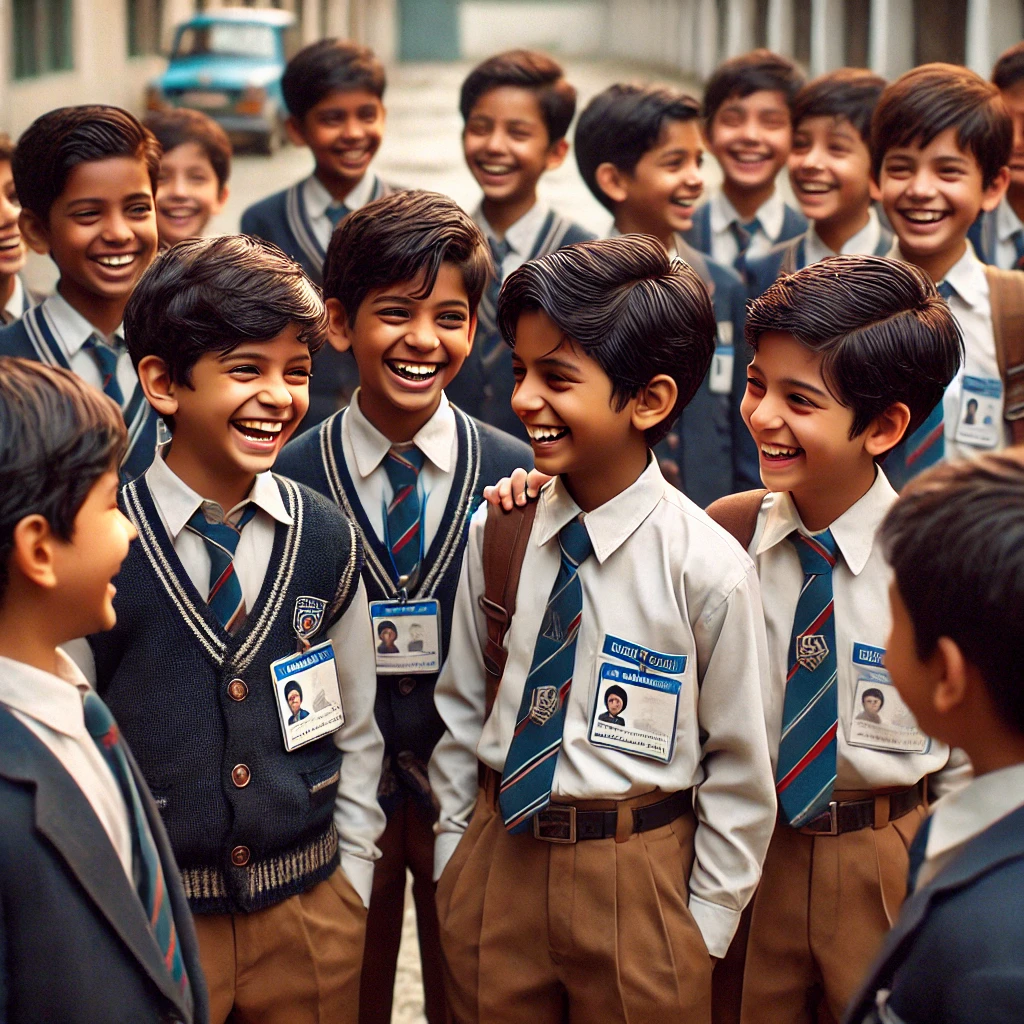
Do you remember the first time you got an identity card? Maybe it was at school, a small badge with your name and photo. As you grew, you got one for college, and later, one for work. But beyond these visible IDs, we carry invisible ones too, our roles as a sibling, friend, parent, man or woman. These roles shape not only how the world sees us but also how we see ourselves.
Shakespeare captured this so well in As You Like It:
All the world’s a stage,
And all the men and women merely players;
They have their exits and their entrances;
And one man in his time plays many parts. -William Shakespeare
An excerpt from All the world’s a stage (from As You Like It) William Shakespeare
Now, imagine removing all these identity cards from around your neck—who would you be then? You might look at your body and say, “This is me.” But this is your body, then, who, really, are you?
The Search for Identity
My Grandfather
Growing up, I was fortunate to have my parents and grandparents close by. My grandfather left a lasting impression on me. I still remember the pride he took in his work as an optometrist and the warmth his patients had for him. Long ago, he even tried to start a lens factory! But when that didn’t work out, he returned to his practice, dedicating himself to it for decades until retirement.
You’d think retirement would bring rest and relaxation, but for him, it was anything but peaceful. He did have time to rest, but seemed lost.After years of identifying as “the optometrist,” he suddenly faced a daunting question: “Who am I now?” Without his professional identity to define him, he felt adrift, as though he had lost a part of himself.
Pilgrimages and Prayer
In search of something to fill this void, he started traveling, just like many retirees in India do. He went to temples, made pilgrimages to Kashi and Kanyakumari, hoping these journeys would give him a renewed purpose. Yet each time he returned home, that emptiness lingered.
Eventually, he found some comfort in a small temple in my grandmother’s hometown, where he could fall back into a quiet routine. I think he was searching for a connection to something greater than himself, something that might fill the gap left by his work
The Consequences of a Lost Identity
As time went on and his health declined, I noticed a change in him. He seemed to lose his spark and sense of direction. He had always dreamed of owning his own shop, and that unfulfilled dream lingered as a quiet regret. Without a clear purpose outside of his work, it was as if he gradually let go of the will to keep going. He aged quickly, eventually falling ill, and when he passed, it felt as though he had quietly drifted out of life, unanchored and adrift.
Watching him, I learned something profound: Our identities are not just societal constructs; they shape our sense of purpose and fulfillment. When those identities fade or are stripped away, we risk losing our motivation and connection to life itself. We need meaning in life beyond our roles and labels.
Philosophical insight
Converging Teachings on Identity
When I was in school, we had classes with ISKCON (the International Society for Krishna Consciousness) where they’d talk to us about moral values, spirituality, and teachings from the Bhagavad Gita. In one such session, they asked us, “Who are you?” It sounds so simple, but the more they talked, the more I realized it wasn’t. They encouraged us to think beyond our names, our bodies, to see ourselves as souls. I thought I understood it then, that maybe our mind was the soul, that’s who we truly are. But as I grew older, I began to realize that I was wrong.
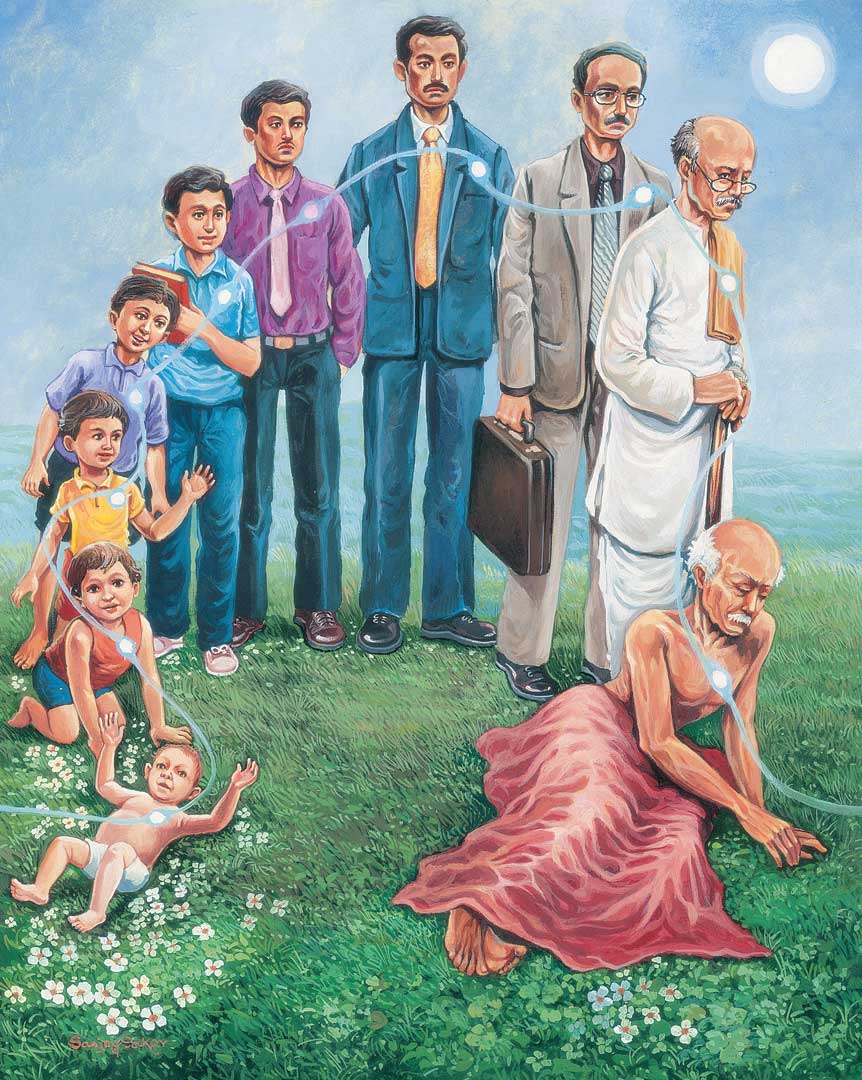
There’s a line in the Bhagavad Gita that speaks to this idea of a continuous soul:
na jāyate mriyate vā kadāchin
nāyaṁ bhūtvā bhavitā vā na bhūyaḥ
ajo nityaḥ śhāśhvato ’yaṁ purāṇo
na hanyate hanyamāne śharīre
BG 2.20: The soul is neither born, nor does it ever die; nor having once existed, does it ever cease to be. The soul is without birth, eternal, immortal, and ageless. It is not destroyed when the body is destroyed.
To me, this verse says that while our roles and eventually body changes, there’s something within us that stays the same.
Soul: The spiritual or immaterial part of a human being or animal, regarded as immortal.
A few years ago, I read an amazing book called The Power of Now by Eckhart Tolle. The book says that to feel happy and peaceful, we need to live fully in the present moment. Tolle explains that many of our worries come from something called the “ego”, a part of our mind that keeps thinking about past mistakes or worrying about the future.
Ego: It is the “I” or self. The ego creates your identity.
What intrigued me most was when he said, “You are not your mind.” He introduces the idea of a higher consciousness he calls “Being,” which cannot be fully understood through thought or words; it is more of a calm awareness we can feel. When we connect with this state of “Being,” we experience true happiness.
But, honestly, this left me feeling even more confused. Having been taught that I am not just my body now led me to question whether I am also not my mind or thoughts either. This idea frustrated me, pushing me back to the same question: Who am I, really?
Being: Being is a higher consciousness that emanates from the Universal Source of all life. It is timeless and eternal.
Both ISKCON’s teachings about seeing ourselves as souls and Tolle’s insights on transcending the ego converge on a central theme: our true identity lies beyond physical form and societal roles. They encourage us to explore deeper aspects of existence rather than getting caught up in transient labels.
Advaita Vedanta
As a Hindu, I’ve often heard that the Bhagavad Gita contains the answers to all of life’s questions. While exploring its teachings, I happen to come across Advaita Vedanta, a Hindu philosophy that delves deeply into the nature of existence. In many ways, I found that Eckhart Tolle’s concept of “Being” closely parallels the concept of Brahman, the unchanging, infinite reality that underlies the entire universe.
Advaita: The term Advaita literally means “non-secondness” but is usually rendered as “nondualism.”
According to Advaita:
- Brahman is the ultimate reality, not a god in the traditional sense but the purest form of existence.
- Everything you see, experience, and even you yourself are expressions of Brahman.
“Brahma satyam jagan-mithya
Jivo brahmaiva naparah” -Adi Shankaracharya
This means that Brahman alone is real; this world is unreal (maya); and the individual soul (jiva) is not different from Brahman.
To illustrate this concept: imagine a vast ocean so large that no one can see it all at once. Picture waves forming on its surface some small and some large; each wave appears different yet is made from the same water. Although they seem distinct from one another, they are merely different shapes and sizes of the same ocean.

In this way, Advaita Vedanta teaches that all individuals, everything in existence, are like those waves in the ocean; distinct yet fundamentally part of one vast entity known as Brahman. The philosophy says that moksha (liberation from suffering and rebirth) is attained through knowledge of Brahman- a path requiring spiritual discipline and experience.
Conclusion
Imagine life as a river. Roles and identities flow in and out, like water running over stones. Our ego tries to cling to these passing labels, but they’re just temporary markers on a much longer journey. Beneath the surface lies our true self.

So, what does all this mean? Discovering who we truly are is a lifelong journey, and a difficult one. I’ve only begun to scratch the surface. I understand that I am not my labels, not my body, and or even my thoughts. Advaita teaches that I am Brahman, but I do not fully comprehend what that means. Words may never answer this question. Perhaps the answer isn’t something we can simply define, it’s something we need to experience for ourselves.
So, who are you? How far along are you in your journey towards finding these answers?
“Who am I?”—it’s one of the most important questions we can ask ourselves.